
The Strategy of the Pitch
There is a profound stillness that settles over a village cricket ground just before the bowler begins their run-up. In The Last Innings, a new cricket tactics simulation available on PC and PlayStation 5, this stillness is not merely atmospheric; it is the crucible in which the entire match is forged. Moving away from the twitch-reflex dominance of traditional sports titles, this game asks players to inhabit the minds of the captain and the bowler, transforming the space between two deliveries into a rigorous intellectual exercise. It is a title that understands that cricket is, fundamentally, a game of chess played on a sprawling oval of grass, where every field placement and subtle change of pace carries significant tactical weight. You are engaging in a complex tactical duel that requires constant attention and adaptation to the ever-changing circumstances of the match.
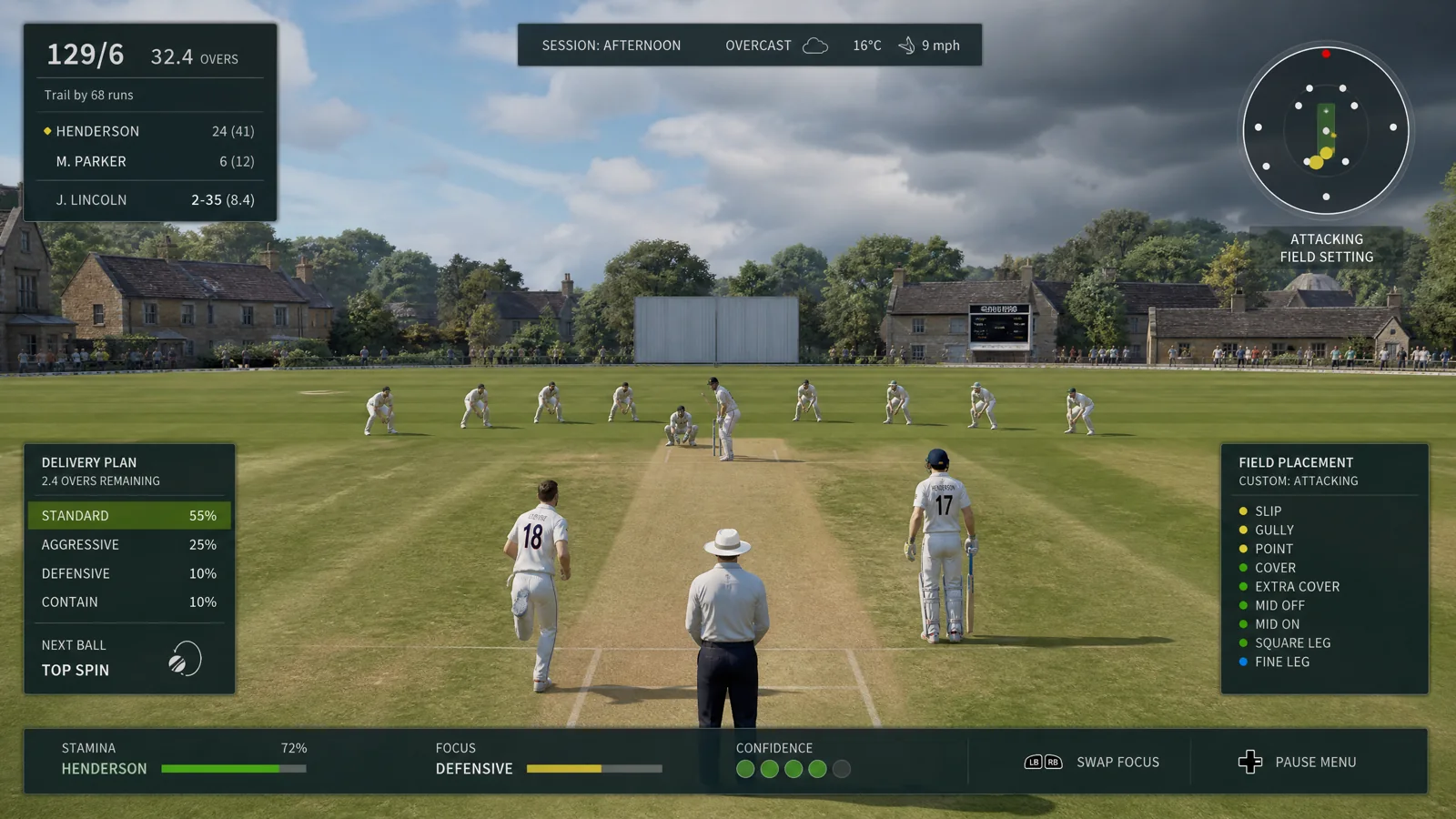
When you first load into a match, the broadcast camera sweeps over a meticulously rendered village green, capturing the dappled sunlight and the gentle sway of the boundary ropes. The HUD is clean yet dense with information, presenting the score, overs remaining, bowler stamina, a detailed pitch map, and the overarching delivery plan. It is here, staring down a resolute batter against your premier spinner, that the game’s core mechanics truly shine. You are not just mashing a button to hurl a leather ball; you are orchestrating a complex sequence of events designed to deceive, frustrate, and ultimately dismiss the opposition.
Field Placement and the Art of Deception
The standout feature of The Last Innings is its deeply intuitive field placement system. Unlike other titles where fielding presets feel rigid and unresponsive to the immediate match situation, here you are encouraged to micro-manage your fielders to set elaborate traps. If you notice a batter has a propensity to drive through the covers, you can strategically position a short extra cover and a deep point, inviting the shot while simultaneously preparing for the inevitable mistake. The game engine dynamically adjusts the AI’s batting approach based on your field, creating a fascinating cat-and-mouse dynamic.
This tactical depth is further enhanced by the delivery plan mechanic. Before each ball, you can map out a sequence of deliveries, establishing a narrative for the over. You might bowl three consecutive outswingers on a good length, lulling the batter into a false sense of security, before unleashing a sharp inswinging yorker. The execution of these plans is deeply satisfying, rewarding patience and foresight over brute force. The game introduces a nuanced bowler fatigue system that forces you to constantly evaluate the physical toll of your strategy. The interplay between your grand plans and the physical limitations of your players adds a compelling layer of realism to the proceedings.
As a bowler progresses through their spell, their stamina bar gradually depletes, affecting both their pace and accuracy. Pushing a fast bowler for one over too many can result in disastrously loose deliveries, while spinners might lose their ability to extract sharp turn from the pitch. This necessitates careful rotation of your bowling attack, ensuring that your key match-winners are fresh when the situation demands it most. It is a brilliant representation of the endurance aspect of test and first-class cricket, adding a layer of resource management that elevates the overall experience. The challenge lies in managing your squad's energy levels over the course of a gruelling match.
The Batting Creep and Timing Woes
While the bowling and fielding systems are a triumph of design, the batting mechanics present a slightly steeper, and occasionally frustrating, learning curve. The Last Innings demands absolute precision when you are at the crease. The controls require you to marry footwork, shot selection, and timing in a split-second window. When it clicks, threading the ball through a crowded infield or lofting a spinner over the bowler's head feels immensely rewarding. The haptic feedback on the PlayStation 5 DualSense controller is particularly effective here, conveying the satisfying thwack of leather on willow or the jarring vibration of an edge.
Unfortunately, the game’s tutorials regarding batting timing are frustratingly brief. New players are largely left to fend for themselves, relying on trial and error to understand the intricate relationship between the bowler’s release point and the optimal moment to initiate a shot. A more comprehensive training module, perhaps breaking down the biomechanics of different strokes, would have been a welcome addition. As it stands, the initial hours spent batting can feel like an exercise in futility, which stands in stark contrast to the welcoming, albeit complex, nature of the fielding and bowling systems.
"The true beauty of the game lies in its quiet moments, the intense periods of contemplation where a match is won or lost long before the ball is even bowled."
Pacing, Performance, and Accessibility
In terms of pacing, The Last Innings is unapologetically deliberate. It embraces the slow-burn tension of the sport, meaning that matches can stretch out over considerable periods. This is a game designed for long, thoughtful sessions rather than quick bursts of action. For cricket purists, this commitment to authenticity will be a major draw, but it may alienate those looking for a more arcade-like experience. The developers have included a robust simulation engine that allows you to fast-forward through less critical passages of play, ensuring that you can tailor the time commitment to your liking.
Performance on both PC and PlayStation 5 is generally excellent. The player models boast realistic animations, capturing the idiosyncratic bowling actions and batting stances of different player archetypes. The lighting engine is particularly impressive, accurately reflecting the changing conditions of a day-long match, from the bright glare of the afternoon sun to the long, creeping shadows of the evening. There are occasional framerate dips during complex fielding animations with multiple players converging on the ball, but these instances are rare and do not significantly detract from the overall experience.
Systems at a Glance
- Delivery Planning: String together sequences of deliveries to set up batters and exploit weaknesses.
- Dynamic Field Placement: Granular control over fielder positioning to create bespoke traps.
- Stamina Management: Monitor bowler fatigue to maintain pace, accuracy, and spin throughout a spell.
- Haptic Feedback: Enhanced controller vibration on PS5 for shot impact and fielding interactions.
- Match Simulation: Flexible fast-forward options to manage the pacing of longer formats.
The Final Verdict
Accessibility is an area where the game makes commendable strides, despite the aforementioned batting tutorial issues. The inclusion of various difficulty sliders allows you to independently adjust the challenge of batting, bowling, and fielding. Furthermore, the UI is highly customisable, with options to increase text size and alter colour palettes for better visibility. The pitch map and delivery HUD can be simplified or expanded based on your preference, ensuring that the wealth of tactical information does not become overwhelming for newcomers to the sport. Ultimately, The Last Innings succeeds brilliantly in its primary objective: translating the cerebral, tactical essence of cricket into a compelling video game format. By focusing on the strategic battle between bowler and batter, and the crucial role of field placement, it offers an experience that is both intellectually stimulating and deeply authentic. The brief batting tutorials and occasional performance hiccups are minor blemishes on an otherwise exceptional title. It is a game that rewards patience, planning, and a deep appreciation for the nuances of the sport, securing its place as a must-play for strategy enthusiasts and cricket fans alike, earning a solid score of 8.7.